The right eCommerce reporting tool depends on your shop system, your costs, your markets and how you want to pay. For scaling European DTC brands from €1M in net revenue that want to see what to scale and what actually drives profit, Klar is the closest fit.
- Klar: Klar fits scaling European DTC brands from €1M in net revenue, in one market or several that want to monitor precisely what actually brings their profit. The Core Plan sells advanced reporting on its own from €200/month. The Core + Attribution Plan adds advanced attribution incl. MMM and geo-lift tests from €400/month. Klar hosts data in the EU and is ISO/IEC 27001 certified.
- Triple Whale: Triple Whale fits US brands that run on Shopify and want AI agents. Its paid plans are 12-month subscriptions with no published price.
- Polar Analytics: Polar Analytics fits Shopify teams with an in-house analyst. The Core Plan starts from $750/month under $5M GMV.
- Admetrics: Admetrics fits brands that want the price tied to ad spend. The Growth Plan starts from €399/month with €20,000 of monthly ad spend included.
- Lifetimely: Lifetimely fits smaller single Shopify stores that start with cohorts and LTV. The S Plan starts from $49/month for up to 500 orders.
- adtribute: adtribute fits DACH brands on Plentymarkets. The Insights Plan, with BI dashboards, starts from €649/month.
We have had 1,000+ conversations with European DTC brands about their reporting. They rarely ask which dashboard looks best. They ask whether the numbers will match what their finance team sees. I think that is the right question, so this guide is built around it.
Which eCommerce reporting tool fits your setup?
Klar covers the broadest European setup in this comparison. The other five platforms are built around more specific setups, from single Shopify stores to US brands that want to focus on AI agents.
| If you … | Look at |
|---|---|
| are a scaling DTC brand in Europe from €1M in net revenue, in one market or several, and want to know exactly what drives your profit, with data hosted in the EU | Klar |
| are a US brand that runs on Shopify and wants AI agents inside the platform to work on top of your analytics | Triple Whale |
| run on Shopify and have an in-house analyst who builds custom metrics and dashboards | Polar Analytics |
| prefer a price tied to ad spend, with a monthly ad volume included in each plan | Admetrics |
| run a single Shopify store with up to 500 orders a month and want to start with cohorts and LTV | Lifetimely |
| sell in the DACH region on Plentymarkets, or want custom attribution models built with a vendor data team | adtribute |
What does an eCommerce reporting tool do that GA4 and spreadsheets don't?
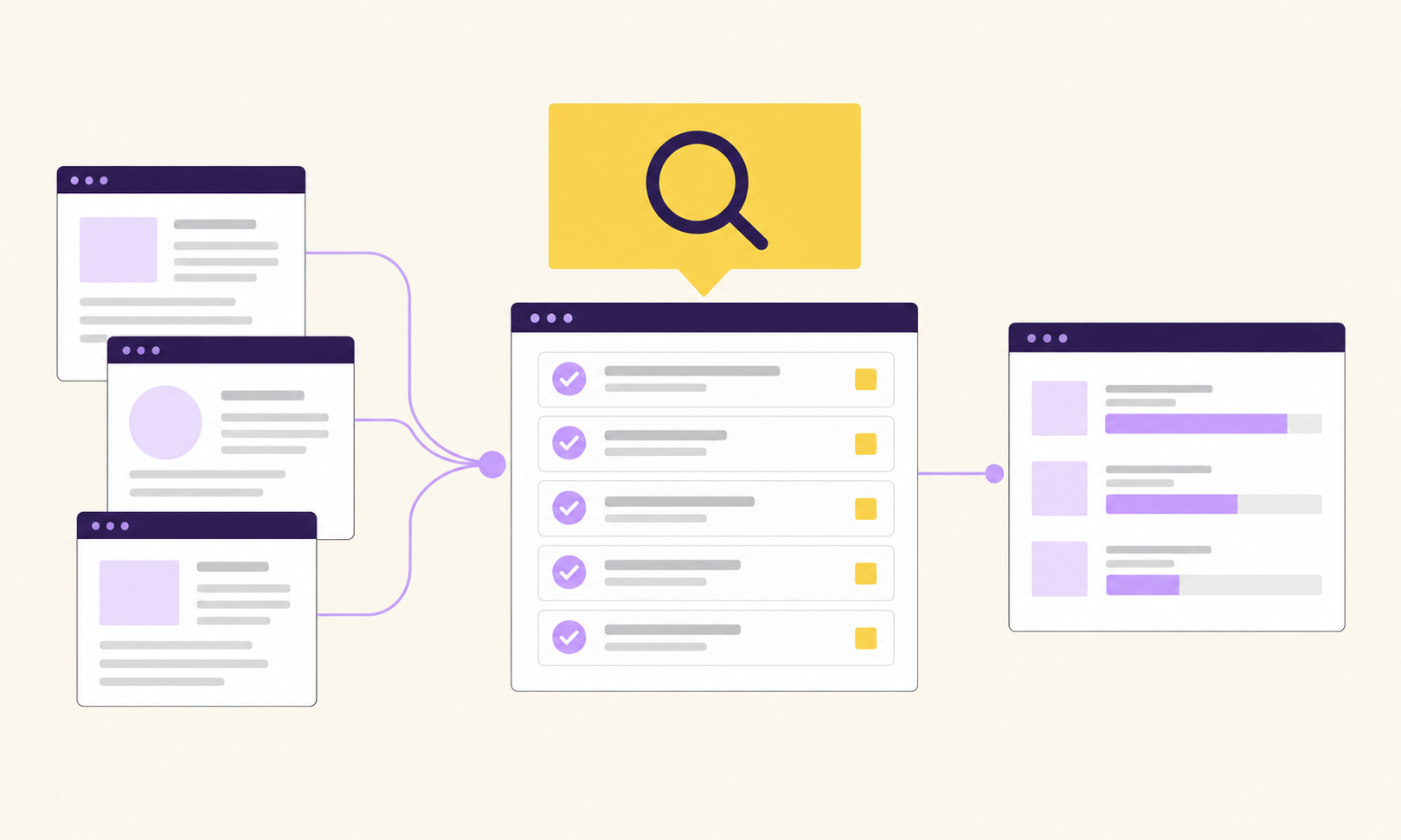
An eCommerce reporting tool connects your shop and ad data and takes your real costs off every order. Marketing and finance then see one set of numbers. GA4 covers sessions, traffic and conversions. It can import cost data, but somebody has to build and maintain that import. A spreadsheet can hold your costs, and somebody rebuilds it every week.
Most brands start with three numbers that disagree. Meta and Google count the revenue their own campaigns influenced. The shop counts orders before any costs. The finance team counts what is left after costs. All three are right by their own rules. A reporting tool earns its place when marketing and finance sign off on the same figures.
Which KPIs belong on an eCommerce KPI dashboard?
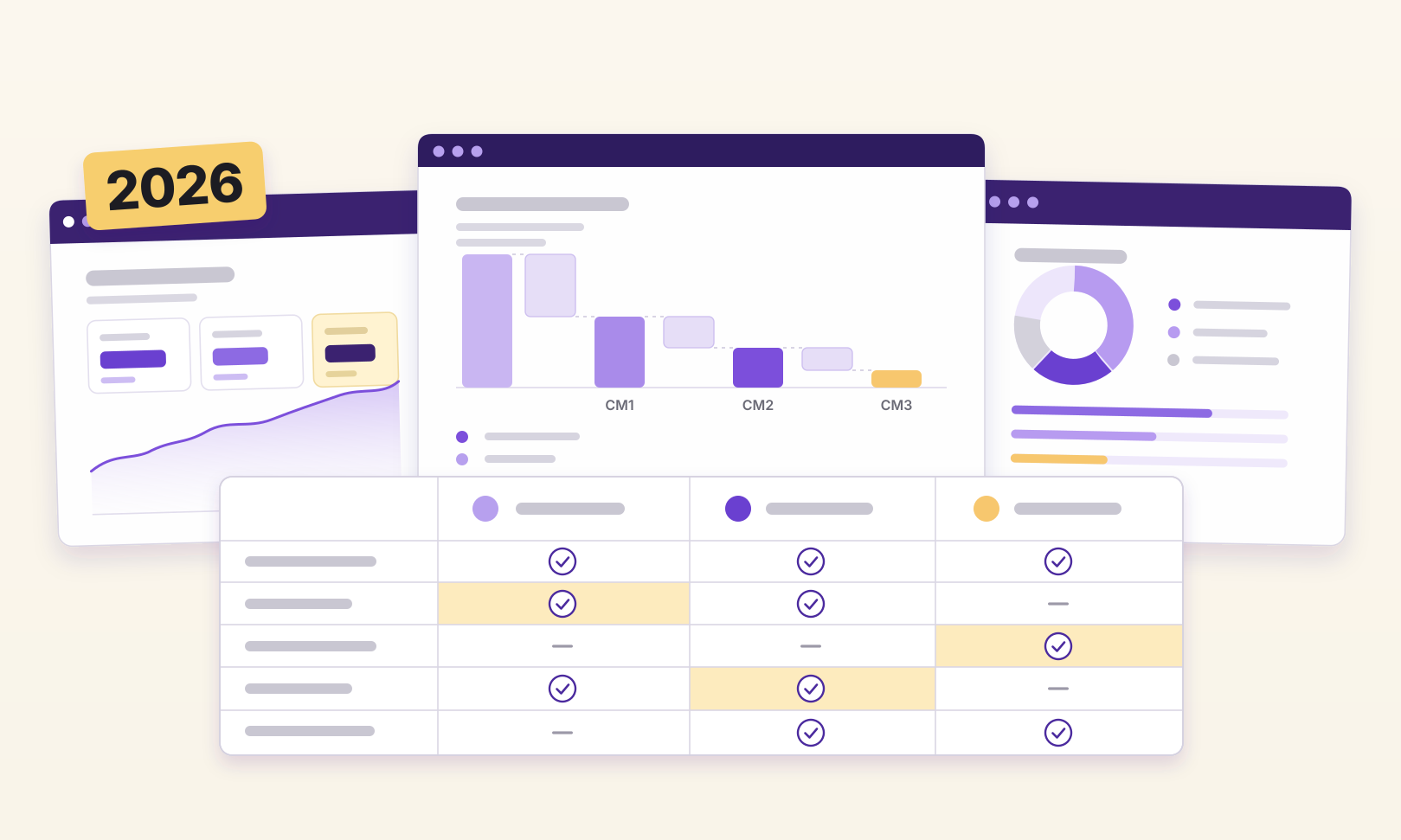
An eCommerce KPI dashboard should show net revenue, marketing costs, MER, new customers, CAC and contribution margin down to CM3. CM1 is net revenue minus product costs. CM2 also deducts logistics and payment costs. CM3 deducts marketing. A dashboard that stops at revenue tells you what sold, but not what you kept.
What to check before you choose an eCommerce reporting tool
Before you shortlist an eCommerce reporting tool, check six things. They are shop system connections, cost inputs per order, the basis of customer value, measurement methods, the price basis and data access. Each check ends with a question for the demo.
1. Does the reporting tool connect your shop system and all your stores?
A reporting tool must connect your shop system directly or through a documented module. It also needs all your stores and country shops in one account. Many tools are built on Shopify first. Brands on Shopware, WooCommerce, Magento, JTL, Oxid, Centra or Plentymarkets should check the connection before anything else. How often data refreshes during the day depends on the same connection.
Ask in the demo: Which of our shop systems do you connect directly, what does a second store cost, and how often do orders and ad spend refresh?
2. Does the reporting tool deduct your real costs per order?
Profit reporting is only correct when the tool deducts your costs at the level where they happen. Shipping changes by country and parcel weight, and payment fees change by provider. Product costs change over time. Bundles need their components accounted separately, and a replacement order carries product and shipping costs but no revenue.
Let's say, with made-up numbers, that a €60 net order costs €20 in product and €2 in payment fees. Shipped at home for €5, it leaves €33 in CM2. Shipped to a neighbouring country for €11, the same order leaves €27. A tool with one flat shipping rate shows both orders as equal. I think flat cost assumptions per order are where most reporting setups go wrong, long before anybody looks at attribution.
Ask in the demo: Can we set shipping by country and weight, payment fees per provider and product costs with a date range, and how do you treat bundles, returns and replacement orders?
3. Is customer lifetime value calculated on margin or on revenue?
Customer lifetime value should be calculated on contribution margin, because CLV sets how much you can pay to acquire a customer. A revenue-based CLV still contains product, shipping and payment costs. Two channels with the same revenue per customer can therefore leave very different margins.
Ask in the demo: Is CLV calculated on revenue or on contribution margin, and can we see it by first-order channel next to CAC?
4. Is attribution, MMM and incrementality tests part of the plan?
Plans differ in whether attribution, marketing mix modelling (MMM) and incrementality tests are included, sold as an add-on or kept for an enterprise tier. Together, these methods show which marketing really drives sales and what happens when you cut or raise spend. That is why the models in the plan matter. Multi-touch attribution follows the touchpoints of each order. MMM measures the effect of spend over time, including channels without clicks. Incrementality tests check whether a channel adds sales at all. Our eCommerce attribution tools comparison covers the choice between these methods in depth.
Ask in the demo: Which attribution models, MMM and incrementality tests are in the plan you are quoting us, and from which price?
5. How is an eCommerce reporting tool priced, and what makes it more expensive?
The price basis decides what makes a reporting tool more expensive: net revenue, GMV, ad spend or monthly orders. Ad-spend pricing rises when you scale campaigns, and per-store pricing rises when you open a second shop. Net-revenue pricing grows with the business itself. Contract terms differ too, because some vendors sell only 12-month subscriptions. It also matters whether you can buy reporting on its own, without attribution.
Ask in the demo: What would we pay at twice our current size, what is the shortest contract term, and is reporting available without attribution?
6. Is your data hosted in the EU, and who can access it?
European brands need to know where customer data is stored and which certificate covers the vendor. They also need a Data Processing Agreement. Access matters too: how many users are included, whether roles can hide margin data from an agency, and how AI assistants connect through MCP (Model Context Protocol).
Ask in the demo: Where is our data hosted, which certificate applies, and can we hide margin data from an agency role?
eCommerce reporting tools compared: Klar, Triple Whale, Polar, Admetrics, Lifetimely and adtribute
Klar documents connections to more European shop systems than the other five platforms, and Klar is the only platform here that sells a paid reporting plan without attribution. Klar and adtribute calculate customer value on margin, and Admetrics and Lifetimely show both a revenue and a margin view. Triple Whale (SQL editor in the Foundation Plan) and Polar Analytics (custom metrics and dashboards) document the deepest custom analysis.
Scroll sideways to see all columns →
| Criterion | Klar | Triple Whale | Polar Analytics | Admetrics | Lifetimely | adtribute |
|---|---|---|---|---|---|---|
| Shop systems, direct | Shopify, Shopware 5 and 6, WooCommerce, Centra, Oxid, Amazon, BigCommerce | Shopify, WooCommerce, BigCommerce, Amazon | Shopify, Amazon Seller Central, TikTok Shop | Shopify, Shopware, WooCommerce, JTL, Amazon | Shopify | Shopify, Shopware 5 and 6, WooCommerce, Plentymarkets |
| Shop systems via module, add-on or API | Magento 1 and 2 (modules), JTL-Wawi (JTL-Klar-Sync), any other system (Klar API) | Magento and other systems (custom connection) | Custom connectors (add-on) | Magento (tracking module), other data via Google Sheets or S3 | Amazon Seller Central (add-on) | Magento (custom integration), Amazon (Sellerboard) and custom shop systems (Insights Plan) |
| Several stores in one account | Multi-shop and country stores with their own costs | As many stores as needed on paid plans | Multiple stores at no extra cost | Unlimited shops in every plan | Yes, with one subscription per store | Several Shopify stores, one connection each |
| Currency conversion | Daily spot rates | Average rate of the period for historical data | Daily rates | Multi-currency conversion in every plan | Daily rate per order (supported currencies) | Daily exchange rates |
| Cost inputs per order | Shipping by region and weight, payment fees per provider and country store, COGS per SKU with date ranges, tax per product, bundles split into components | COGS per variant with cost history, payment, shipping, handling, taxes, custom expenses | Product costs from Shopify, logistics and other expenses through Google Sheet imports | Returned COGS, shipping, transactions, marketing, expenses | Product costs, shipping, transaction fees, marketing, custom costs | Product costs and COGS at any granularity, operating expenses |
| Profit stages | CM1, CM2, CM3, EBITDA | Net Profit, Net Margin | Gross Profit, CM1 to CM4, Net Profit | CM1, CM2, CM3, EBITDA | Contribution Margin, Net Profit | CM1, CM2, CM3 |
| Customer value basis | Margin (CM2 per customer) | Revenue per customer | Revenue a customer will spend | Revenue (CLV report), margin (customer intelligence page) | Revenue or gross margin per customer (LTV report) | Margin (CM2 over 90 days) |
| Measurement methods | Multi-touch with a data-driven model, MMM, geo-lift tests (Core + Attribution Plan) | Multi-touch from the Foundation Plan, MMM, incrementality and geo-lift through Compass (Enterprise Plan, or separately for eligible plans) | Multi-touch in BI, incrementality tests in the Custom Plan ($10M+ GMV, per test) | Multi-touch and data-driven in every plan, MMM add-on in the Custom Plan | First- and last-touch UTM (Facebook, Google, TikTok) | Five standard models (last touch, first touch, linear, position based, full impact), plus custom models |
| Paid reporting plan without attribution | Yes, Core Plan | No | No | No | No | No |
| Data refresh | Shop orders almost instantly, Meta and Google every 20 mins, 8am to 10pm GMT+1 (Pulse) | Every 15 minutes or less | Shopify every 15 minutes on its new pipeline, other sources up to hourly by plan | Every 4 hours (Growth Plan, Business Plan), 2 hours (Custom Plan) | Orders live, Meta and Google hourly | Every 30 minutes |
| Price basis | Net revenue, last 12 months | Annual GMV and package | GMV bracket | Ad spend | Monthly orders, per Shopify store | Net revenue and features |
| Data location | EU data centres | Stored primarily in the US, processed also in Israel, the EEA and other locations | US by default, EU hosting on request (website FAQ); terms name the US and the EU | Processed and stored in the EU | May be transferred outside the US, the EEA and the UK | EU infrastructure by default |
| Billing and contract term | Monthly, cancellable each month | 12-month subscriptions, billed monthly or annually | 1 or 12 months | Monthly, or 12 months prepaid with 15% off the base fee | Monthly, cancel by uninstalling the app | Monthly or yearly billing |
| Users and roles | Unlimited, roles can hide margin metrics | Unlimited on paid plans, costs can be hidden | Unlimited, custom roles | Unlimited, permissions from the Business Plan | Unlimited, same permissions for all members | Unlimited, granular access |
| MCP access | Read-only | Read-only | Reads data, edits custom metrics inside Polar | Read-only | Session snapshot, valid up to 4 hours | Read-only, aggregated |
| Custom dashboards and metrics | new daily overview going live in 1-2 weeks where you can customize things, Flex Tables for custom cuts | No-code dashboards, custom metrics, SQL editor | Custom dashboards, custom metrics and dimensions | Own dashboards from widgets, custom metrics and dimensions in the Custom Plan | Custom reports and dashboards | Basic in the Attribution Plan, advanced in the Insights Plan |
The six eCommerce reporting tools in detail
Klar
Best for: Scaling DTC brands in Europe from €1M in net revenue, in one market or several, that want profit measurement down to CM3 on their own costs and data hosted in the EU. Choose Klar if you want to see precisely what brings you money.
Klar is an eCommerce reporting and attribution platform that helps scaling brands to profitably grow their business. Klar is based in Munich. Its pricing page says Klar makes sense from €1M in annual net revenue or in a high scaling phase.
Strengths:
- European cost logic: Klar sets logistics costs by region and weight, and transaction costs per payment provider. Cost entries carry a date range, and the P&L runs from GMV down to EBITDA.
- Shop systems: The shop system matrix lists Shopify, Shopware, WooCommerce, Centra, Oxid and Amazon. Custom shops and ERPs push their orders through the Klar API.
- Customer value on margin: Klar calculates CLV as Contribution Margin 2 divided by customers. Retention Trends shows it by the last-click channel of the first order, next to blended CAC.
- Data protection: Klar's Trust Center says the platform is hosted in the EU and offers a Data Processing Agreement to all customers. GUTcert certifies Klar Insights GmbH to ISO/IEC 27001.
Watch out for:
- Custom dashboard builder: A freely composed dashboard layout is on the feature roadmap for Q4 2026. Based on Klars statement a custom overview builder will be released in 1-2 weeks. Klar's reports already cover the dashboards and KPIs eCommerce brands need, because it built them from its work with DTC brands.
- Sending conversions to ad platforms: The roadmap plans this for Q1 2027. Several platforms in this comparison offer it today, some as an add-on.
- Below €1M in net revenue: Klar's pricing page names €1M as the starting point, so smaller stores may find a cheaper start elsewhere.
Price basis: Net revenue of the last 12 months. The Core Plan sells reporting from €200/month. The Core + Attribution Plan adds attribution, a marketing mix model and geo-lift tests from €400/month.
Verdict: Pick Klar when your reporting has to follow European costs, shop systems and data rules. Klar also lets you start with reporting and add attribution later.
Triple Whale
Best for: US brands that run on Shopify and want AI agents to work on top of their analytics.
Triple Whale is a US analytics platform from Columbus, Ohio. Triple Whale's pricing page shows four plans, Free, Foundation, Automate and Enterprise, and quotes them by annual GMV and package.
Strengths:
- Custom analysis: The Foundation Plan includes no-code dashboards, customer segments, custom metrics and a SQL editor.
- AI agents: The Foundation Plan includes Moby chat and AI-assisted analysis. The Automate Plan adds Moby Actions in connected platforms and Moby Automations that run on a schedule, according to Triple Whale's plan guide.
- Measurement: Compass combines multi-touch attribution, MMM, incrementality and geo-lift tests. It is part of the Enterprise Plan and may be available separately for eligible Foundation Plan or Automate Plan businesses.
Watch out for:
- Commitment: Triple Whale sells the Foundation, Automate and Enterprise Plans as 12-month subscriptions and shows no price on its pricing page.
- Customer value basis: Triple Whale's LTV metric divides order revenue by unique customers, so it still contains product and fulfilment costs.
Price basis: Annual GMV and package, quoted in a walkthrough.
Verdict: If you sell in the US on Shopify and want AI agents inside your analytics, Triple Whale is the closest match. Plan for a 12-month contract.
Polar Analytics
Best for: Brands on Shopify with an in-house analyst who builds custom metrics and dashboards.
Polar Analytics is built for teams that want to model their own numbers. Its Core Plan bundles Business Intelligence with multi-touch attribution through the Polar Pixel, according to Polar's terms.
Strengths:
- Custom analysis: Analysts build their own metrics, dimensions and dashboards without code.
- Profit views: Polar analyses profit by store, product, country, channel and campaign.
- Several stores: Polar connects several stores at no extra cost.
Watch out for:
- Customer value basis: Polar's LTV is the total a customer will spend, so it is based on revenue.
- Incrementality: Incrementality tests sit in the Custom Plan for brands above $10M in annual GMV and are priced per test.
Price basis: GMV bracket. The Core Plan starts from $750/month under $5M GMV.
Verdict: Polar Analytics is the pick for Shopify teams that want to model their own numbers and have an analyst to do it.
Admetrics
Best for: Brands that prefer a reporting price tied to ad spend, with a monthly ad volume included in each plan.
Admetrics is an attribution and profit analytics platform from Frankfurt am Main that prices its plans by ad spend. Every plan on its pricing page includes multi-touch and data-driven attribution.
Strengths:
- Margin depth: The P&L report runs through CM1, CM2 and CM3 to EBITDA.
- Shop connections: Shopware, WooCommerce, JTL and Amazon connect next to Shopify.
- Unlimited shops: Every plan includes unlimited shops, integrations and users.
Watch out for:
- Price grows with ad spend: Every plan includes a monthly ad volume, and spend above it costs extra. The Growth Plan includes €20,000 and bills 1.5% above it. The Business Plan includes €70,000 and bills 1% above it.
- Plan gates: Multi-market views start in the Business Plan. Custom metrics and MMM sit in the Custom Plan, and the Growth Plan refreshes data every 4 hours.
Price basis: Ad spend. The Growth Plan costs €399/month billed monthly, €20,000 ad spend included; add 1.5% above it.
Verdict: Admetrics suits brands that are happy for their reporting bill to move with their ad budget, and want attribution and a full P&L in one plan.
Lifetimely
Best for: Single Shopify stores with up to 500 orders a month that want to start with cohorts and LTV.
Lifetimely starts at $49/month, the lowest entry price in this comparison. It belongs to the Amp group, and its pricing page sets the price by monthly orders per Shopify store. Every paid plan includes attribution.
Lifetimely's strength is cohort analysis. LTV cohorts can be cut by first product and discount code, with first- and last-touch channel filters. Lifetimely then sets accumulated gross margin against CAC, so payback is visible per cohort. Shopify orders sync live, and Meta and Google ads sync every hour.
Watch out for:
- One subscription per store: A second Shopify store needs its own subscription.
- Attribution depth: Attribution uses first- and last-touch UTM data, and the help center names Facebook, Google and TikTok as supported channels.
Price basis: Monthly orders, per Shopify store.
Verdict: Lifetimely is a sensible first step for a small Shopify store that wants cohort and LTV reporting at a low price.
adtribute
Best for: Brands in the DACH region on Plentymarkets, or teams that want custom attribution models built with a vendor data team.
adtribute is a German vendor from Germering that runs on EU infrastructure by default, according to its compliance page. It sells two plans, Attribution and Insights, and only the Insights Plan includes BI dashboards.
adtribute's Attribution Plan already connects Plentymarkets next to Shopify, Shopware and WooCommerce. Its models cover last touch, first touch, linear, position based and full impact, and both plans include custom attribution models. adtribute's Semantic Layer holds margin tiers from CM1 to CM3, and data refreshes every 30 minutes.
Watch out for:
- Plan gates: BI dashboards, custom shop systems and Amazon through Sellerboard come with the Insights Plan, not the Attribution Plan.
- Data team: A dedicated data team for proactive insights and advanced custom dashboards is a €1,499/month add-on, available only in the Insights Plan.
Price basis: Net revenue and features. The Insights Plan starts from €649/month with dashboards.
Verdict: For DACH brands that want attribution and BI from a German vendor, adtribute belongs on the shortlist, as long as you plan to work with its data team.
How much do eCommerce reporting tools cost in 2026?
Entry prices for eCommerce reporting run from $49/month at Lifetimely to $750/month at Polar Analytics. Triple Whale publishes no price. Klar is the only platform in this comparison that sells a paid reporting plan without attribution, with the Core Plan from €200/month. Each row shows the entry plan that includes reporting.
Scroll sideways to see all columns →
| Platform and plan | Monthly price | Price basis | Measurement in this plan | Measurement in higher plans or add-ons | Other plan limits |
|---|---|---|---|---|---|
| Klar Core Plan | From €200 | Net revenue, last 12 months | None (reporting only) | Multi-touch, MMM, geo-lift (Core + Attribution Plan) | None named |
| Klar Core + Attribution Plan | From €400 | Net revenue, last 12 months | Multi-touch, MMM, geo-lift | None | Dashboard builder on the roadmap |
| Triple Whale Foundation Plan | Not published | Annual GMV and package | Multi-touch | MMM, incrementality, geo-lift (Compass, in the Enterprise Plan or separately for eligible plans) | 12-month subscription |
| Polar Analytics Core Plan | From $750 | GMV bracket, this price under $5M GMV | Multi-touch | Incrementality tests (Custom Plan, $10M+ GMV, per test) | None named |
| Admetrics Growth Plan | From €399 (€339 billed annually) | Ad spend, €20,000/month included, add 1.5% above | Multi-touch, data-driven | MMM (add-on in the Custom Plan) | Multi-market views from Business Plan, custom metrics in Custom Plan |
| Lifetimely S Plan | From $49 | Monthly orders per Shopify store, this price up to 500 orders | First- and last-touch | Ask how MMM or incrementality is handled | One subscription per store, Amazon as a paid add-on |
| adtribute Insights Plan | From €649 | Net revenue and features | Five standard models plus custom models | Ask how MMM or incrementality is handled | Data team (€1,499/month add-on), Actions for postbacks and exports (from €169/month) |
For adtribute we list the Insights Plan, because adtribute lists BI dashboards, retention analytics and the margin structure as not included in its Attribution Plan. Entry prices apply to different store sizes, so compare them at your own size. Prices are shown as each vendor publishes them, in the original currency, so check whether VAT is included.
Which eCommerce reporting tool fits your growth stage?
Lifetimely fits a single Shopify store with up to 500 orders a month. Klar fits brands from €1M in net revenue, and the Triple Whale Enterprise Plan fits US Shopify brands from about $10M in GMV. Each threshold comes from the vendor's own pricing or plan pages.
| Stage | Where to start | Why |
|---|---|---|
| One Shopify store, up to 500 orders a month | Lifetimely S Plan | Lifetimely prices by orders, and the S Plan covers this volume |
| Price should follow ad spend | Admetrics Growth Plan | The Growth Plan includes €20,000 of ad spend a month and bills 1.5% above it |
| From €1M in net revenue, one market or several | Klar Core Plan, then Core + Attribution Plan | Klar's pricing page names €1M as the starting point |
| Shopify under $5M GMV, with an in-house analyst | Polar Analytics Core Plan | The Core Plan entry price applies under $5M GMV |
| US Shopify brand from about $10M in GMV | Triple Whale Enterprise Plan | Triple Whale's plan guide points brands of about this size to the Enterprise Plan |
adtribute depends less on stage than on shop system. It is the option here for brands on Plentymarkets.
eCommerce reporting tools: FAQ
What is the best eCommerce reporting tool for European DTC brands?
Klar, for scaling DTC brands from €1M in net revenue that want profit down to CM3. Klar connects Shopware, WooCommerce, Magento, JTL, Centra, Oxid and Amazon next to Shopify. It calculates CLV on contribution margin and hosts data in the EU. The Core Plan sells reporting from €200/month, and the Core + Attribution Plan adds MMM and geo-lift tests from €400/month.
Do I need attribution in my eCommerce reporting tool?
It depends on whether you can already see how profitable each channel is. Without that view, you steer your budget blind, so you need a solution for it either way. Reporting answers what you earned after costs, and attribution answers which marketing drove it. Klar sells reporting on its own in the Core Plan from €200/month and adds attribution with the Core + Attribution Plan from €400/month. The other five platforms in this comparison include attribution in their paid plans.
Which eCommerce reporting tools work with Shopware, JTL or Magento?
Klar and Admetrics document connections to Shopware, JTL and Magento. Klar connects Shopware 5 and 6 directly, Magento 1 and 2 through official modules and JTL-Wawi through the JTL-Klar-Sync. Admetrics connects Shopware and JTL directly and Magento through a tracking module. adtribute connects Shopware 5 and 6 and Plentymarkets directly, and Magento through custom integrations. Triple Whale connects Magento through a custom connection.
Which eCommerce reporting tools host data in the EU?
Klar, Admetrics and adtribute describe EU hosting or processing. Klar's Trust Center says its platform is hosted in the EU, and GUTcert certifies it to ISO/IEC 27001. Admetrics says data is processed and stored in the EU. adtribute runs on EU infrastructure by default. Polar's website FAQ says it hosts in the US by default and offers EU hosting on request, while its terms name the US and the EU. Triple Whale's Trust Center says it stores data primarily in the US, and its privacy notice names the US, Europe, Israel and other locations. Lifetimely's privacy policy says personal data may be transferred outside the US, the EEA and the UK.
Which eCommerce reporting tools work for agencies and brands with several stores?
Klar handles several stores and country stores in one account, each with its own costs, and its roles can hide margin metrics from an agency. Admetrics includes unlimited shops in every plan, Polar connects several stores at no extra cost, and Triple Whale supports as many stores as needed on paid plans. adtribute connects each Shopify store separately, and Lifetimely needs one subscription per Shopify store.
Can I connect eCommerce reporting data to ChatGPT or Claude through MCP?
Yes. Klar's MCP connection is read-only and, according to Klar, included in every plan. All six platforms document an MCP connection, and Triple Whale, Admetrics and adtribute also describe theirs as read-only. Polar's connection can also edit custom metrics inside Polar. Lifetimely shares a session snapshot that is valid for up to four hours.
How we compared these eCommerce reporting tools
We compared what each vendor documents on its own pricing, help and product pages, checked between 1 and 4 November 2026. We did not run hands-on tests inside the tools. Where a page did not answer a question, we left it out or turned it into a question for the demo. How we compare eCommerce tools explains the evidence rules we also applied here.
This comparison is weakest where vendors change their pricing pages often, and where a vendor publishes no price at all. Check the current pricing page before you sign.